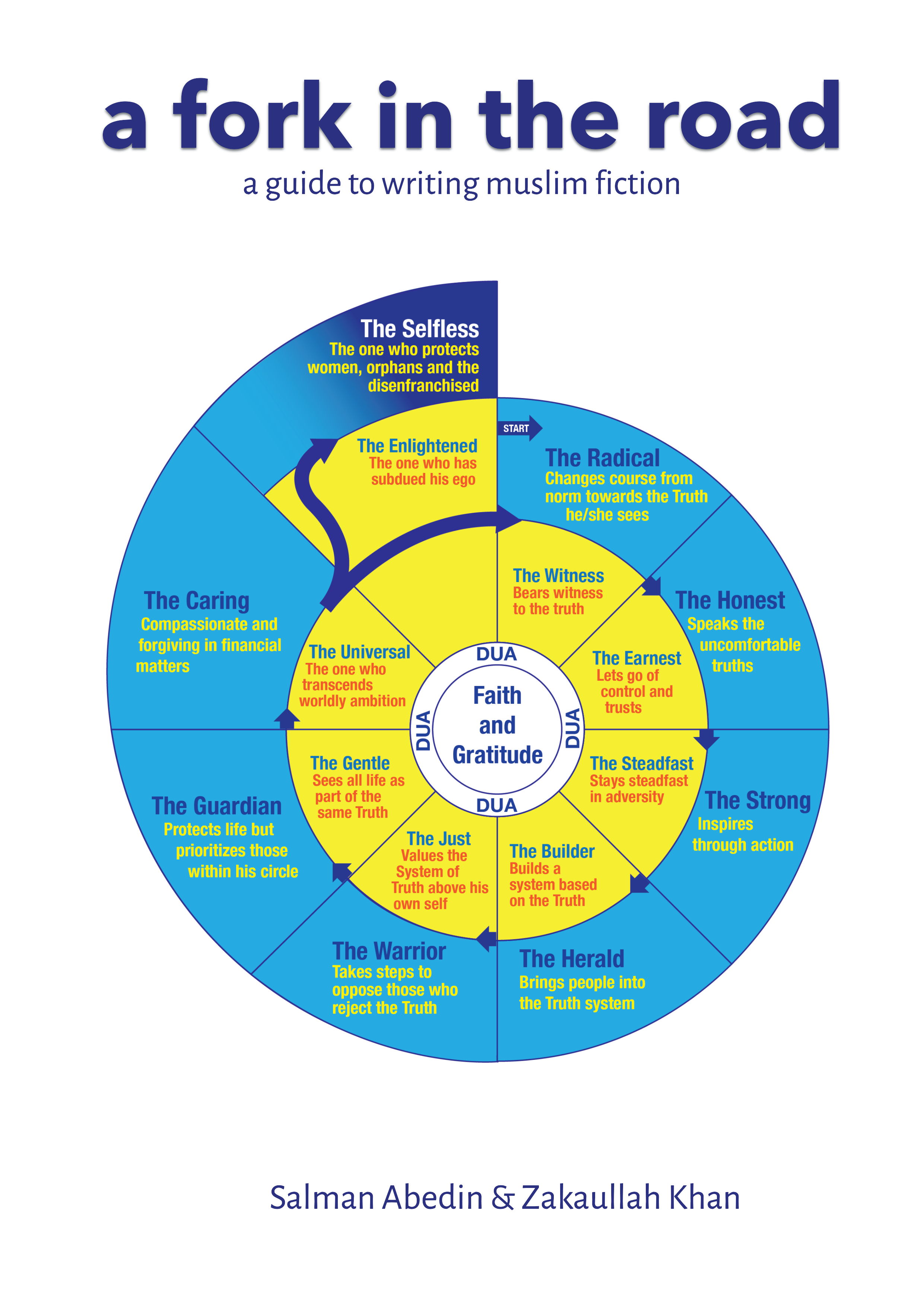

External: The Radical

At this stage, the individual stands apart, rejecting the status quo and charting a new course with unshakable certainty. To outsiders, they appear as a disruptor—a radical voice challenging norms. This step often feels confrontational, as the hero’s newfound vision conflicts with societal expectations. Historical examples, such as the Prophet Muhammad’s (PBUH) initial call to Islam, illustrate this role of shaking a community from complacency.
Internal: The Witness

Internally, this phase is about bearing witness to the Truth. It is not about rebellion for rebellion’s sake but a deep, unshakable realization of what is right. At this stage, the Truth might manifest to The Witness as a fully realized vision, or merely glimpses of patterns that make perfect sense, but are at odds with the norms of society. The Witness must have the courage to accept the Truth and be a living testament to it, even when it invites resistance. This is a moment of internal awakening—a pivotal acknowledgment of one’s purpose.
Catalyst: Dua
At the heart of this step lies Dua. The hero may not yet have the clarity to articulate their path fully, but they know that something is missing in their normal existence. They know there has to be something more, a deeper meaning or purpose, even if this is just a longing they feel in their heart, or a sense of being out of place. It is this seeking, or asking—this silent or spoken supplication—that fuels their courage to step into the role of The Radical. Dua connects their nascent dissatisfaction with the status quo to divine support, enabling them to face external opposition.
Core: Faith & Gratitude
Faith serves as the foundation that allows the Witness to embrace the Truth and withstand the trials ahead. It is not blind conviction but a deeply rooted certainty that their awakening aligns with a hidden Truth. Gratitude begins to weave itself into the narrative here—gratitude for the realization itself and the Creator who bestowed it.
It is worth noting that change begins from the Core, which can also be seen as the heart of the individual. This is where the yearning for change (Dua/supplication) comes from. It then causes change in the mind and intent of the person, which we refer to here as the Internal self. This change then manifests as physical behaviour and impact upon the environment that is seen by others. This is what is referred to as the External in this guide. As such, every step of the transformation begins from the core and moves outward through the four layers.
Lessons for Content Creators
- Showcase the Hero’s Awakening: Depict the hero’s dissatisfaction with their current reality. Use subtle hints—a sense of longing, disconnection, or unease—to signal the brewing realization that propels them into The Radical’s role.
- Build Tension Between Vision and Norms: Create conflict between the hero’s newfound clarity and societal expectations. Illustrate how their challenge to the status quo shakes the foundations of those around them, creating room for growth, resistance, or transformation.
- Illustrate the Power of Dua: Highlight moments of introspection or longing in your characters. Even before they act, show them seeking answers—through quiet prayers, contemplations, or heartfelt desires that connect them to something greater than themselves.
- Anchor in Faith’s Certainty: Show how the hero’s faith—not as blind belief, but as an inner certainty—becomes their anchor. Let this faith fuel their resolve, even when external circumstances feel overwhelming.
Reflection for Creators
- How can you subtly introduce a sense of dissatisfaction or longing in your characters to reflect the universal yearning for purpose?
- In what ways can your hero’s inner struggles and realizations create tension and depth in their narrative arc?
- How might you depict Dua—whether as explicit supplication or a quiet desire—as the catalyst for transformation?
How does faith, as a deeply rooted certainty in the Truth, sustain your hero against external resistance?
